
Long vs Short in Crypto: What They Actually Mean (and When to Use Each)
Going long profits when price rises; going short profits when it falls. Here's what each really means, how shorting works, the risks, and when to use which — in plain English.
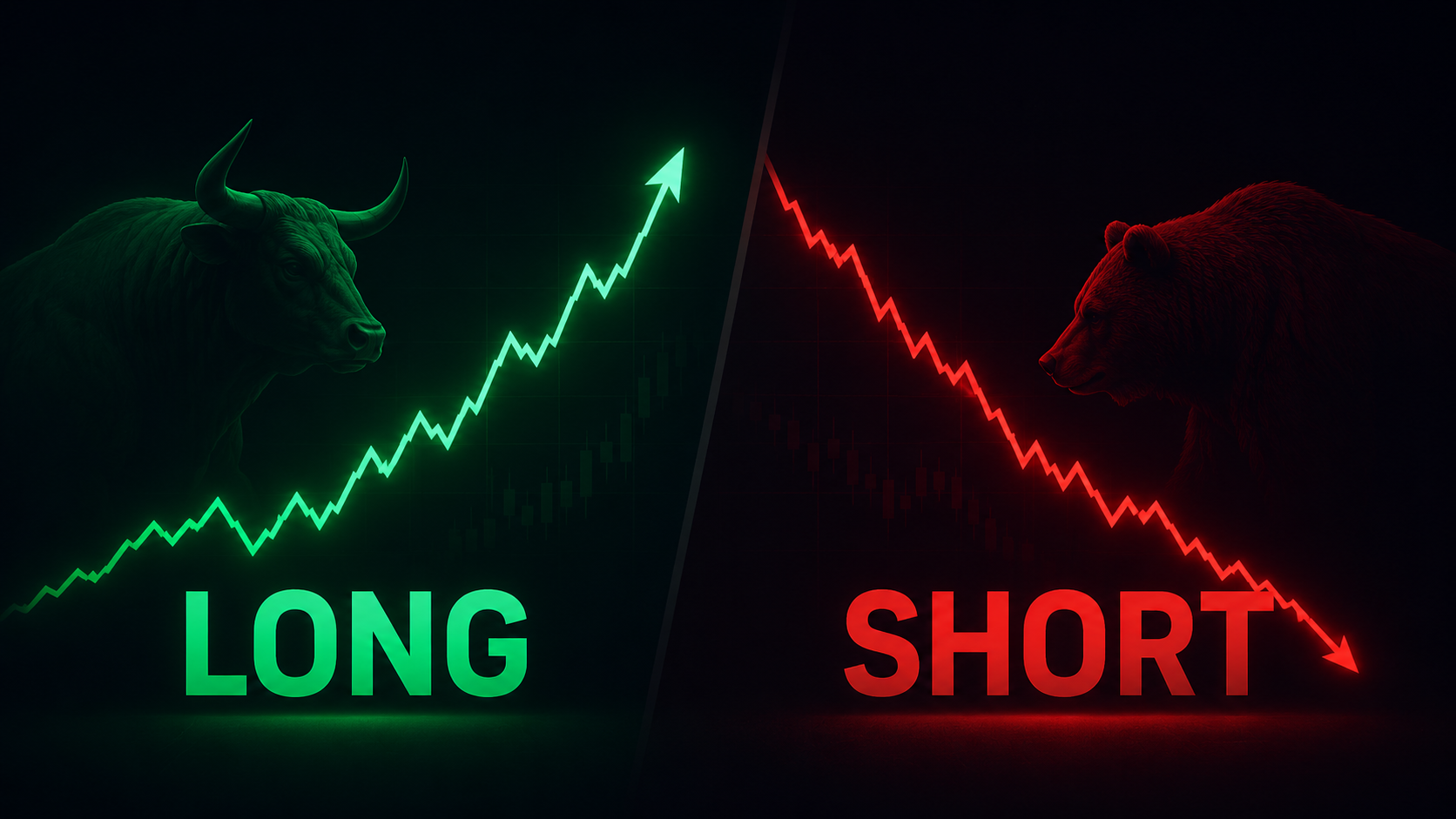
In crypto, you can make money when the market goes up and when it goes down — if you know which side to take. Those two sides are called long and short, and understanding them is the difference between only profiting in bull markets and profiting in any market. Here's what each actually means, how shorting works, and when to use which.
Going long: betting on "up"
Going long means you profit when the price rises. It's the intuitive one: buy low, sell high. If you buy Bitcoin at $60,000 and it climbs to $66,000, your long is up 10%.
Every spot purchase is a long. On futures, a long lets you do the same with leverage — and the extra risk that comes with it.
Going short: betting on "down"
Going short means you profit when the price falls. Mechanically, you borrow the asset, sell it at the current price, and aim to buy it back cheaper — pocketing the difference. On a crypto exchange you don't do this by hand; you just open a "short" position on a futures contract and the exchange handles the mechanics.
Example: you short ETH at $3,000. It drops to $2,700 — your short is up 10%. If instead it rises to $3,300, your short is down 10%.
Shorting is how traders profit in bear markets and downtrends — and how they hedge longs they don't want to sell.
Long vs short at a glance
| Long | Short | |
|---|---|---|
| You profit when | Price goes up | Price goes down |
| Maximum loss | Price falls to zero | Open-ended (grows as price rises)* |
| Best in | Uptrends, accumulation | Downtrends, breakdowns |
| Beginner-friendly? | Yes | Use caution |
*A short's loss has no natural ceiling — the higher price goes, the more you lose — which is why risk management matters even more on the short side. A long can only fall to zero; a leveraged short can lose more than your initial margin if you don't manage it.
When to go long vs short
- Go long when the trend is up, price is reclaiming support, momentum is positive — or simply when you want exposure to an asset you believe in.
- Go short when the trend is down, price is breaking key support, or you want to hedge existing holdings without selling them.
The honest truth: most retail traders should default to long and treat shorting as an advanced tool. Shorting fights crypto's long-term upward drift, demands tighter risk control (because losses are open-ended), and tends to punish beginners who short strong assets out of fear.
The risk you can't ignore
On futures, both longs and shorts use leverage, and both can be liquidated if the market moves far enough against you — see how to trade crypto futures on Binance for the full picture. Two rules apply to either side:
- Always set a stop-loss — especially on shorts, where the downside is open-ended.
- Size by risk. Risk a small fixed percentage per trade so no single move, up or down, can hurt you.
FAQ
What does going long mean in crypto?
Taking a position that profits when the price rises. Buying spot is a long; on futures you can go long with leverage.
What does going short mean in crypto?
Taking a position that profits when the price falls. You effectively sell high and aim to buy back lower; on an exchange you just open a "short" on a futures contract.
Is shorting crypto riskier than going long?
Generally yes. A long's maximum loss is the price falling to zero; a short's loss grows without a ceiling as price rises. Shorts demand tighter stops and smaller size.
Can beginners short crypto?
They can, but most shouldn't start there. Default to long while learning, use low leverage, and always set a stop-loss before trying shorts.
Ezath calls both longs and shorts on BTC, ETH and SOL — each with a defined entry, stop-loss and targets, and a public track record of how they actually played out. Want them placed for you automatically? See the Auto-Trader, or start with the free signals →